
Disponible
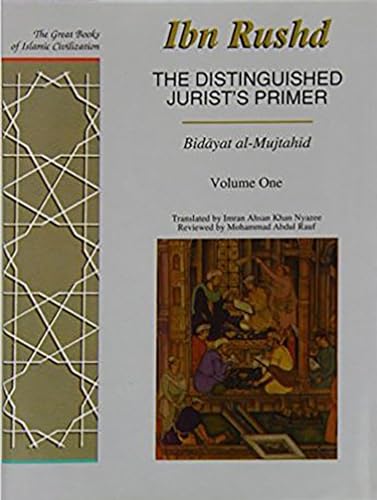
AUTHOR : ibn rushd | imran ahsan khan nyazee | mohammad adbul rauf
ISBN : 1-873938-13-6
LANGUAGE : Anglais
KEYWORDS : Bidayat al-Mujtahid | Islamic law | Fiqh | Ibn Rushd | Comparative jurisprudence | Sharia | Madhhab | Legal theory | Usul al-fiqh | Maliki law | Sunni schools of law | Legal reasoning in Islam
PUBLISHER : centre for muslim contribution to civilization
PAGES-NUMBER : 609
YEAR : 1994
ABSTRACT : In *Bidayat al-Mujtahid*, Ibn Rushd discusses and compares the major Islamic jurisprudential schools of thought, focusing on the differences between the four main schools: Hanafi, Maliki, Shafi'i, and Hanbali, in their interpretations of complex legal issues. He argues that these differences are not due to misunderstandings but rather stem from differing views on the interpretation of Islamic texts. Ibn Rushd emphasizes that ijtihad (independent legal reasoning) is a right for every qualified scholar, and that there should be no blind adherence to one particular school over others. He highlights that the diversity of opinions in Islamic jurisprudence reflects the richness of Islamic thought and the various methods of deriving legal rulings from the sources.
Disponible
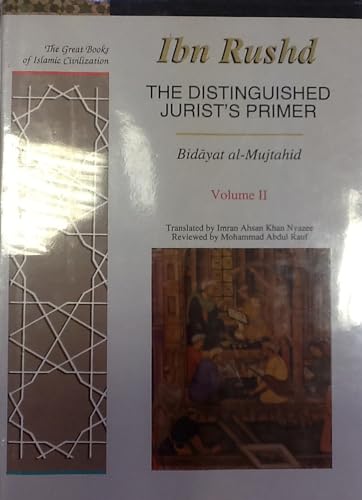
AUTHOR : ibn rushd | imran ahsan khan nyazee | mohammad adbul rauf
ISBN : 1-873938-93-4
LANGUAGE : Anglais
KEYWORDS : Bidayat al-Mujtahid | Islamic law | Fiqh | Ibn Rushd | Comparative jurisprudence | Sharia | Madhhab | Legal theory | Usul al-fiqh | Maliki law | Sunni schools of law | Legal reasoning in Islam
PUBLISHER : centre for muslim contribution to civilization
PAGES-NUMBER : 619
YEAR : 1996
ABSTRACT : In *Bidayat al-Mujtahid*, Ibn Rushd discusses and compares the major Islamic jurisprudential schools of thought, focusing on the differences between the four main schools: Hanafi, Maliki, Shafi'i, and Hanbali, in their interpretations of complex legal issues. He argues that these differences are not due to misunderstandings but rather stem from differing views on the interpretation of Islamic texts. Ibn Rushd emphasizes that ijtihad (independent legal reasoning) is a right for every qualified scholar, and that there should be no blind adherence to one particular school over others. He highlights that the diversity of opinions in Islamic jurisprudence reflects the richness of Islamic thought and the various methods of deriving legal rulings from the sources.